When I needed to take my 2017 BMW X3 into the dealer for service this past summer, I did something I normally don’t do — opted for the loaner vehicle. With eight years between my latest BMW and today, I thought it might be fun to experience something newer in the BMW model lineup. With few choices, I ended up with a 2025 X3. Although I currently own an X3, it wasn’t my first choice but at least I could compare the next generation with what I drive today.
Whenever I drive a car newer than mine, I explicitly look for something positive to take away from the experience. I had a little rental Nissan and discovered that if I cornered hard, I could lift one of the rear wheels off the ground like my old VW Rabbit — winner! When I whirred around Palm Springs in a Tesla Model 3, the quality of its air conditioner surprised me — we were never hot. Heck, I drove a Dodge Charger along Hawaiian backroads and while it had miserable wandering steering and was utterly stupid for Hawaii’s roads, it did have better than expected trunk space.
But the 2025 BMW X3 is different. I mistakenly thought BMW was still the “ultimate driving machine.” It isn’t. BMW apparently stands for “sheer driving pleasure.” The 2025 X3 is one of the most awful vehicles I’d driven in years and if it is a symbol of “sheer driving pleasure,” it is making a sad statement about BMW’s future.
The moment I sat in the cabin, I was struck by the poor quality of its interior. The fabrics felt cheap and the surfaces were, to quote Jony Ive, “unapologetically plastic.” Admittedly, my X3 is in X-Line trim, but the fundamental surfaces were beneath what one historically expects from BMW and its price point. It isn’t baseline luxury; it is just baseline car.
When the screens came to life, I couldn’t believe how gimmicky they were. It was like BMW didn’t learn anything from the UI/UX mess of the 2017’s iDrive system. The design team must have forgot that the instruments in a car are for helping the driver actually manage and drive the vehicle and its systems (including entertainment). The UI was covered with so much garbage, I found them distracting and a nuisance. BMW could learn a lot from Porsche or the current crop of performance cars.
Driving the new X3 was not pleasant in any way; it made me overwhelmingly anxious to maneuver in any driving situation. Even thought it is only a few inches larger than my current X3, the proportions and blind spots made it very difficult to get a sense of where the SUV was on the road. I found myself constantly fighting window sill height and mirror positions. The A-pillar width and/or angle (I can’t decide which) created a gigantic hole in my forward-field, corner view. I couldn’t safely see if a pedestrian or cyclist was approaching in a crosswalk without fighting the X3’s design compromises.
The performance of the drivetrain and steering — the signature of a BMW — is an utter disappointment. The engine in ANY performance mode was flat and noticeably compromised. My 2017 X3 is a dog, but the 2025 X3 is a sleeping dog that can’t figure out where its tail is. I pulled into the parking garage in my building and needed to ease into the available parking space. The lag between the pedal and engine was atrocious. Braking was not great and the steering was numb and flat. I don’t understand the positive reviews of this X3’s drivetrain; it is lifeless. I yearned for my underpowered F25 chassis and N20 engine (considering my other BMW is an E36/37 with an S52, that’s saying something).
The body design, aside from being impossible to see out of, can be described as childish and the furthest thing from premium. The blocky, plastic brick-style form is simply ugly, bordering on the aesthetics a RAM van. It isn’t a future design nor conservative design; instead, it is lazy design. It doesn’t project the desired premium or luxury notes that BMW is striving for today. It just disappears into a boring, shapeless box with a confused grill. I guess that’s something — a grill that makes no sense.
Personally, I don’t care for BMW leaning in on gimmicks to dictate its design vision. Call outlandishly notched and angled displays, disco interior lighting, and tedious exterior light strips as the replacement for chrome what they are: gimmicks. I really don’t want to be staring down silly maintenance that virtually guarantees that I’ll be spending time in an authorized BMW service center more than I do today. Those exterior lights will fail, the monitors will be expensive to produce (and replace), and the disco mode will get old and go unused in a month. At least BMW’s child company, Mini, makes a circular display that is interesting and on-brand. The angled, notch UI and design touches don’t make any sense even with the Neue Klasse styling. The interface is at odds with each vehicle’s design.
In the end, I found the 2025 X3 to be dangerous on the road, and now having driven an X2, I have to assume all BMWs of this generation are compromised. To quote BMW’s chairman Oliver Zipse, “a drivetrain is necessary and important, but not THE most important thing when you create a car. It’s customer needs, especially in that (luxury) segment.” Wow. The 7-series is a laughable clown car, so I guess the segment is for a niche of estranged Lexus owners. The XM ended up being a joke that didn’t sell, and the 5-series is a disproportionate goof. Seems like BMW leadership may be a bit out-of-touch (despite its improvements, X3 sales were flat in 2025). BMW makes cars and a drivetrain is kind of important to its buyers.
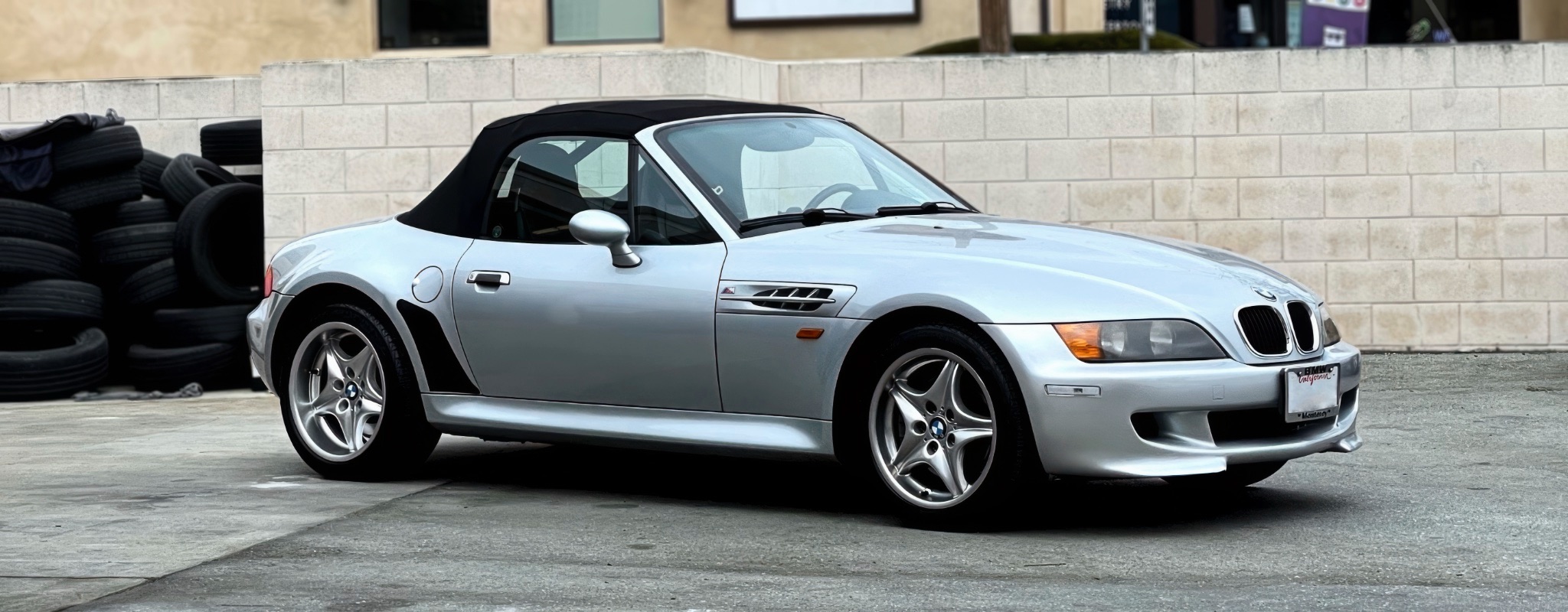
So why do I have a photo of my BMW M Roadster at the top of this post? It represents the best of BMW — unique design, fun performance, and taking measured chances within a premium brand. It was the midpoint of BMW’s identity that peaked with the i8 in 2019 that had striking design, future-forward concepts, and the right balance of performance and BMW-statement luxury. BMW threw all of that away during the last decade, and with it, the cult of buying power of those drivers who can afford to invest in the “ultimate driving machine” as they move up in life. BMW doesn’t understand what its buyers saw in BMW luxury. Today, BMW doesn’t come across as luxury nor is it premium. I find it notably downmarket where clicks, not serious buyers, matter.
I care about other people on the road and my BMWs gave me confidence to be a good, safe driver in an upscale automobile that I felt proud to drive. I fear BMW’s chairman Oliver Zipse doesn’t care about BMW nor what the brand means globally. It is clear that he only cares about social media and buzz to drive impulse sales. He admitted that the last decade of car development has been to create controversy to drive marketing, not to actually build good cars, and surrounded himself with a design team led by Adrian van Hooydonk that is deconstructing the brand into irrelevance. Domagoj Dukec’s leaves BMW with a design mess throughout its core product line, proving his arrogance was more powerful than his talent and common sense. The hiring of Maximilian Missoni as effectively his replacement strikes me with fear. The Polestar designs are so compromised that I can’t exit out the rear door of a Polestar 2 without bruising my shins. Polestar forgot how to make something as basic as doors. That’s a design failure and doesn’t bode well for BMW’s future.
Apparently, short term whim, Tik-Tok attention, and flashy LEDs are now what BMW cares about, not car owners nor those who sustain the brand. So Oliver, how did that work out for Barney’s New York? Before you answer “that’s retail, not building cars,” let me argue that your strategy is more in line with luxury fashion retailing than big ticket purchases by individuals who are investing in more than a label and a whim.
Every car company ultimately slides into crisis created by its own hubris, and now BMW is setting itself up for its drop. It turned its back on decades of what has defined itself toward something that reeks of velour (current interior design that feels more 1970s), bloated out-of-touch sheet metal (max-scale bodywork drives up cost and drives down pedestrian safety), and misdirected ambitions (luxury-heavy direction in a contracting market). The gimmick-first vision of the “sheer driving pleasure” is misguided. A one-and-done customer strategy doesn’t sustain a business.
In the chairman’s own words that “we don’t believe and we never believed that the drivetrain should dictate what a car should look like because it doesn’t depend on the drivetrain.” His statement couldn’t be farther from the truth and couldn’t be farther from BMW’s DNA.
Look at my M Roadster. That’s drivetrain first. That’s your BMW buyer.